The Spinach Salad Throughput Problem
Making Predictions without Scaling
Let’s say you own a small restaurant with a healthy lunch business. On a good day, you open at 11am, are full by 1pm and the rush peters out by 3pm. You mainly sell salads and sandwiches and the occasional beer or glass of wine – lunch stuff. On a bad day, however, you’re looking at a lot of open seats, only a couple of salads go out, and the only drinks you’re serving are your own as you watch your very perishable stock slowly (and then quickly) go bad.
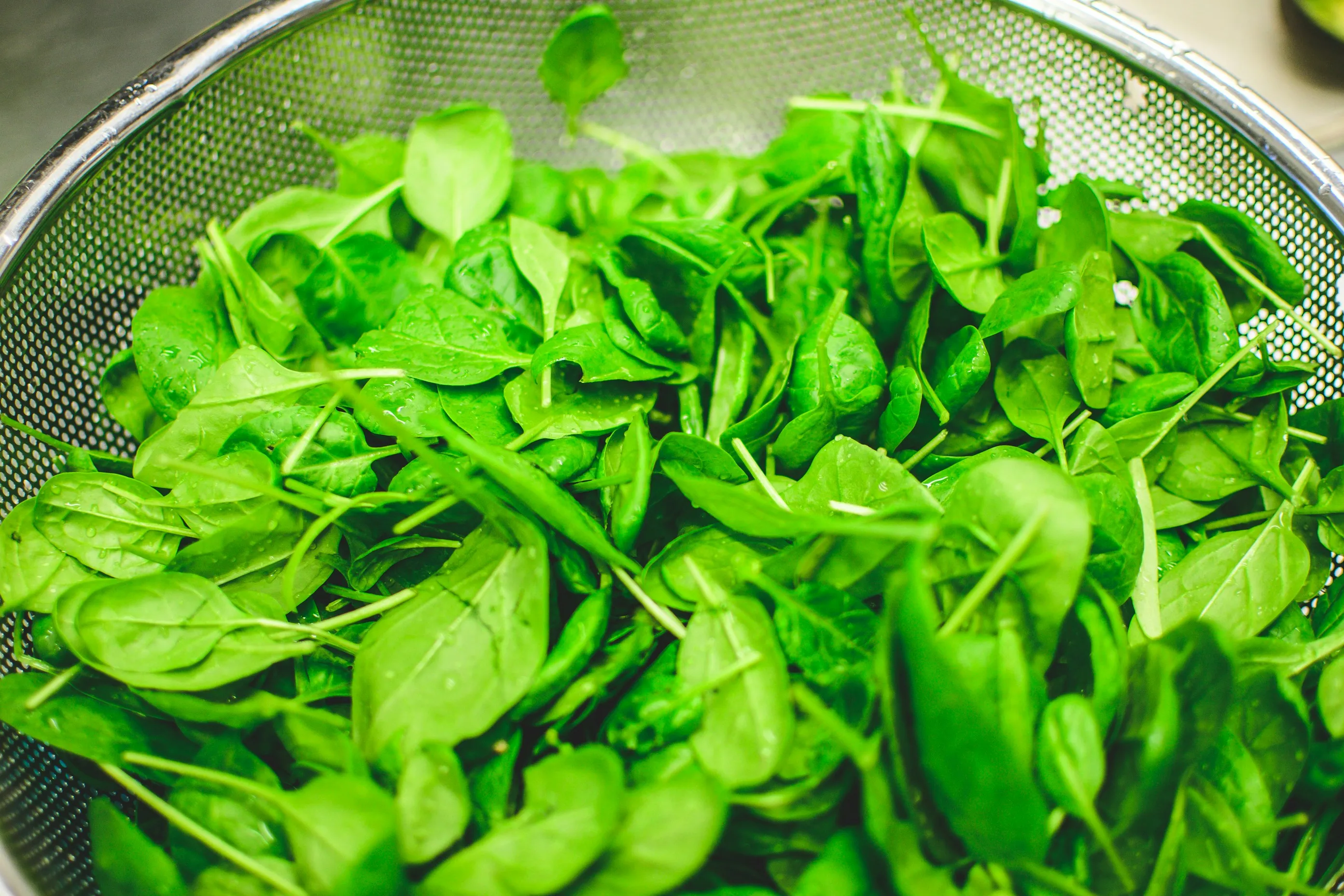
But there’s more to this story: you’re a smart restaurateur, and you know how to build a system to protect you from the uncertainty that underpins your business. You invest in coolers and freezers, you select items that hold well (iceberg lettuce) vs those that wilt within hours (looking at you baby spinach.) Your menu design optimizes for the cost of uncertainty. In other words, you’ve created a system to handle the fluctuations in the size of the lunch rush. Problem solved.
However, problems are never really solved, they just transform into different problems. Now you have to maintain the coolers and freezers, and their electrical and repair costs. All that equipment requires a lot of space that could have been another table or two. Those frozen items just aren’t the same as the fresh ones. You really wanted to serve that baby spinach salad with the pickled onions, bacon and bleu cheese, but the wedge is the only one that makes any financial sense.
What’s interesting about these new problems is they fade into the background – they become ‘the cost of doing business’ to the point you stop viewing them as problems at all. They become invisible, or at least until the back reefer starts making that weird clicking noise again.
Things are going well enough you decide to open a second location. The new spot is in a business district with a couple of boutique shops nearby, so there’s plenty of foot traffic, but the interior is a bit on the small side. The kitchen area is going to eat up a fair amount of floor space, so you reduce the number of tables you’d planned for. You make a choice to offer a take-out friendly menu, optimizing further for the office workers over the foot traffic and the shoppers. And as you’re making all these plans you find an old Magic 8 Ball in your attic, behind a door you’d never noticed before. As you pick it up you think you hear children giggling…
Anyway…
You discover you can ask the Magic 8 Ball about the lunch rush, and it’s uncannily accurate. But here’s another new problem: in your current space, knowing if lunch is going to be busy or not changes almost nothing. You still have all those coolers and freezers, taking up space and adding to the power bill. You could, in theory, turn them off, buy spinach every morning and get a better handle on the food waste, but most of your menu stays the same, as does the revenue coming in.
But now think about the new location. Instead of freezers, you only use a couple small reach-in coolers. Your power bill is lower, your maintenance costs drop. The kitchen area is half the size as the old location’s, giving you back the floor space needed for more tables.
You design a menu around the freshest ingredients you can get delivered every morning. Instead of focusing on just take-out for the office crowd, you design items for the shoppers – higher margin items like drinks and desserts. And a few months after opening you’re bringing in more revenue from the smaller, cheaper to run location, than the larger one you started with. You even get better reviews, because the menu is better and caters to more diners. Business is good.
The only new problem is the Magic 8 Ball makes for a weird moment as you try to convince investors to come on board so you can open more locations. Besides, you’re pretty sure it’s haunted. If only you could use machine learning instead, you think.
Machine Learning has been used for years to help large organizations optimize their supply chains. They know what to stock, where to stock it, and most importantly when. Corporations like WalMart invested heavily in analytics teams, hiring data scientists, analysts, mathematicians and machine learning experts to build out their predictive models. While the cost of these teams is high, it works out to WalMart’s advantage, as they can apply their predictions across their entire footprint.
Now, back to our lunch cafe. Consider the following questions:
- ‘How many covers will we do on Tuesday?’ (Covers are restaurant speak for “customers.”)
- ‘How much revenue will those covers generate?’
- ‘How much spinach should I order?’
- ‘When should I have that condenser on the old cooler checked?’
Armed with probabilistic answers to these questions, you can make better day to day decisions. More importantly, you can build better systems and business models. The problem here, however, is these kinds of predictions aren’t possible without the scale of a huge organization, all its data, and its highly skilled teams. Machine learning in the traditional sense, won’t work.
But I have another idea: agentic driven predictive marketplaces.
While “agentic driven predictive marketplace” is a mouthful, and worse, sounds like the kind of word salad that rapidly goes over its Sell By date, it makes a strange sort of sense. Imagine this scenario:
All your business’s data is pooled into a single unstructured resource. It doesn’t need structure, it only needs to be legible to LLMs. We then create a marketplace of LLM agents, each with its own knowledge base. Some are experts in food trends, some in weather, others still in macro-economic conditions. Each of these agents is given a budget to “invest.” When a business owner enters a question like “How many take-out orders will I have on Tuesday?” the agents each look at the business’s data, as well as external data made available to them through tool calls. They take all that information in, and then bet on an outcome. From this activity we can derive the probability of one outcome or another, making a prediction. Finally, we reconcile that prediction with the actual number of take-out orders on Tuesday, determining which agents win or lose their bets. Over multiple rounds of betting, some agents become well-capitalized, while others go broke. And by tracking their earnings and losses, we learn which agents give the most accurate answers and which do not, allowing us to tune the marketplace to produce better predictions through time.
Now our little lunch place doesn’t need to hire all those data scientists, analysts, mathematicians and machine learning experts, which is convenient since we couldn’t have afforded their salaries anyway. Better, those folks can spend their time and talents on questions a bit bigger than our spinach-throughput.
Over the next few months, I’ll be testing this premise. Currently I’m testing to see if different LLM agents, which are each given different knowledge domains, will have divergent opinions on the daily price of gold. I’m not trying to predict the spot price, but just see if looking at different pools of knowledge (historical pricing data, current events, and macro-economic data) leads to different predictions. If they do, it’s a signal that this might be crazy enough to work.
For the record I did give my Magic 8 Ball a shake and it said “Ask again later.” I guess we’ll just have to wait and see.